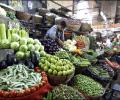
The Consumer Price Index hit the lowest in six months in March at 4.83 per cent.

The rise in consumer price index (CPI) inflation could see the Reserve Bank of India (RBI) in an extended pause mode as regards interest rates, and in turn, keep the market rally in check, believe analysts. Signs of inflation cooling off in the US, however, is likely to provide some cushion as the expectations of a change in stance by the US Fed as regards interest rates is likely to aid sentiment. Back home, CPI inflation surged for the first time in five months to 4.81 per cent in June 2023, and was higher than the street's expectations of 4.58 per cent.

The sound of the water amidst the silence of nature will remove all the tiredness of the journey, says Ashim Chakravarty.

'Future market gains will likely depend primarily on earnings growth.'

The IMD projects total rainfall in the June-September monsoon season as being 99 per cent of the long-period average.

Anshul Gupta, 26, who works in Gurgaon tells us about his two-day trek with his friends.

The southwest monsoon which reached the country on May 30 well within its normal onset date

The government will announce minimum support prices for kharif.

Rainfall in August is predicted to be below normal (less than 94 per cent of LPA), but the situation is expected to improve comparatively in September, the IMD said.

Garlic, ginger and citrus fruits can improve your immunity.

Although the monsoon is not active, it is not sluggish either he said, adding that the eastern coast, central India and north east are getting fairly good rains. Even Maharashtra and parts of peninsula are having rain.


Allaying apprehensions of a food crisis in view of poor monsoon, minister of road transport and highways Kamal Nath said on Friday the country has enough foodgrain reserves to tackle even the worst monsoon situation.
Here's an easy-to-make soup, perfect for a wet monsoon day!

Fitch Ratings on Tuesday raised India's growth forecast for the current fiscal to 7.2 per cent, from 7 per cent projected in March, saying elevated consumer confidence will drive spending, besides increased investments. In June update to its global economic outlook report, Fitch said it expects inflation to decline to 4.5 per cent by end of this year and RBI to cut policy interest rates by 25 basis points to 6.25 per cent.

India will be able to manage potential inflationary pressures if forecasts of sub-par monsoon

The IMD came out with a dismaying prediction.

Send us your favourite pani puri pictures, recipes along with a short description of your favourite memory of the street food and what you like the most about it.
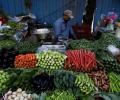
Retail inflation declined to a 25-month low of 4.25 per cent in May mainly on account of softening prices of food and fuel items, with experts saying that RBI is expected to hold interest rates steady in the current fiscal. This is the fourth straight month when retail inflation has declined and the third straight month of Consumer Price Index (CPI) based inflation remaining within the RBI's comfort zone of below 6 per cent. CPI-based inflation stood at 4.7 per cent in April and 7.04 per cent in May 2022.

Apart from the human body, human food will bear direct repercussions. From staples such as wheat, to coffee, dairy, and even the great Hilsa face the threat of reduced supply due to the extreme heat.

The method is based on a network analysis of regional weather data.

It's that time of the year when everything looks greener and prettier.

Monetary policies worldwide has to deal with issues like controlling inflation, promoting growth and financial stability.

A number of significant linkages between rainfall and economic outcomes have policy implications.

The prices of oilseed, coarse cereals & vegetables could also be affected.

A decision on the 26-day session was taken by the Cabinet Committee on Paliamentary Affairs headed by Defence Minister A K Antony on Monday.

Irregular rainfall and a pick-up in commodity costs are expected to weigh on the demand and margins of fast-moving consumer goods (FMCG) companies. Most companies reported a sharp expansion in gross margins in the April-June quarter (first quarter, or Q1) of 2023-24 (FY24), given the lower prices of key raw materials and earlier price hikes. Furthermore, there were expectations that cost savings being passed on could reflect in volume growth going forward. However, these hopes could be dashed if demand recovery, especially in the rural segment, stalls, and gains on the raw material front start to recede.

Ira Trivedi, wellness expert and founder of Yog Love, explains how these postures can help you keep monsoon ailments at bay.
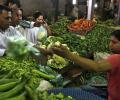
'If you see the composition of items which are causing this spike in prices, most of them have little to do with the kharif harvest, except for pulses and vegetables to some extent.' 'I don't know on what basis the government is claiming that food prices will moderate in the weeks to come.'

Eat healthy with these nutritious laddoos.
The government on Tuesday said the week-long delay in the monsoon will in no way affect India's overall food and agriculture scenario and assured continuity in the country's grain export policy.

Riya takes a break in Colombo... Alaya binges on Thai food... Aahana enjoys a magical monsoon...

This could have huge implications for agriculture, food prices, supply and overall economic growth of the country
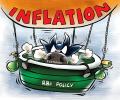
"We have to stand in readiness to go beyond keeping Arjuna's eye to deploying policy instruments, if necessary" to contain inflation, said Reserve Bank Governor Shaktikanta Das on Thursday. Headline consumer price index-based inflation projection for the second quarter of 2023-24 has been revised up substantially, primarily due to the price shock from vegetables, at 6.2 per cent by the RBI form 5.2 per cent estimated in June. Unveiling the bi-monthly monetary policy, Governor Das said the moderation in headline inflation to 4.6 per cent in the first quarter of 2023-24 was in line with the projections set out in the June MPC meeting.

Britannia Industries reported revenue growth of 4 per cent year-on-year (Y-o-Y) in Q1FY25 and volume growth of 8 per cent implying price trends were adverse. Other operating income jumped 195 per cent, due to the incentive received for the Ranjangaon plant. The non-biscuit portfolio (rusk, cake, bread) remained key to growth and contributed 25 per cent of the total revenue.

Consumer goods firms and auto companies are witnessing an upturn in rural demand, which had been lagging for most of FY24. Expectations of a bumper rabi crop harvest have helped turn the tide. The Reserve Bank of India's (RBI's) Monetary Policy Committee kept the repo rate unchanged last week, noting that as rural demand catches up, consumption is expected to support economic growth in 2024-25.

The Lok Sabha was adjourned twice in the post-lunch period on Thursday as a war of words broke out between the treasury and opposition benches, triggered by Congress MP Charanjit Singh Channi's spat with the Bharatiya Janata Party's Ravneet Singh Bittu.

Global experts last week gave the same forecast.
These rainy recipes will keep your lips smacking

Finance Minister Pranab Mukherjee has said food inflation, which stands at over 16 per cent, will begin to come down after the middle of next month on the back of good monsoon.
